Showing posts with label econometric schmeconometric. Show all posts

Thursday, November 18, 2010

2015 - Chinese Cities, Metrics

One of the biggest factor's shaping China's landscape in the next dozen or so years will be the path that its second-tier cities take on development. (Second/third tier basically refers to any city of about 170 in China that have populations of over 1 million, but are not Beijing, Shanghai, Shenzhen or Guangzhou)...and a huge chunk of the money has flown into the architectural, urban, and economic development of cities like Chongqing (which on its own, had a GDP of $95.5 billion in 2009), Dalian and Wuhan.

Two pieces of recent news were therefore quite fun and heartening.  First, via Danwei, Chongqing is shooting to be one of the "happiest cities" in China by 2015.
"According to a new blueprint released at a government conference yesterday, in 2015, Chongqing's GDP per capita will reach USD 8,000, twice as much as current level; the city's regional GDP will by then reach 1500 billion yuan, surpassing Shanghai's current level; the income gap between urban and rural residents will be shrunk to 2.5:1. These projections, once achieved, will make Chongqing "one of the happiest regions" in China. Or at least the Chongqing government officials would like you to believe so."
The use of per capita GDP (instead of aggregate growth numbers) and reducing the urban-rural inequality gap is using metrics that do come much closer to more holistic indicators of well being. (Sidenote: China experimented with a "Green GDP" index in 2006 but abandoned it when it indicated a 3% drop in productivity.)

NEVERTHELESS, the second piece of fun news is that the National Development and Reform Commission (NDRC, not NRDC) has picked five provinces and eight cities as the first hubs for "greening" - by 2015 each will be used as pilots for significantly reducing carbon emissions and energy consumption. (They'll be Guangdong, Hubei, Liaoning, Shaanxi and Yunnan, and Tianjin, Chongqing, Hangzhou, Xiamen, Shenzhen, Guiyang, Nanchang and Baoding.) [via CommidityOnline]

Read Full Post

Tuesday, September 8, 2009

Psychological Returns on Stamp Collecting in China...or Not.


Sometime last month I saw the following study on an SSRN's (the Social Science Research Network - where academic working papers go to procreate) Cognitive Science Network newsletter: "Does Psychological Return Matter? Evidence from China Stamp Market"

ABSTRACT: Previous literature has challenged the traditional claim that collectibles have high returns and expensive collectibles tend to return more. However, only financial returns were examined previously while psychological returns was completely overlooked, which may result in underestimation of returns on collectibles. This paper examines the returns from investment in China stamp market and the existence of psychological returns. The empirical results suggest that stamp returns in China stamp market are very dispersive and expensive stamps tend to have a low return. Potential psychological returns generators have negative effects on financial return of stamps, which implies the existence of psychological return.
After fond flashbacks to trolling around moving sales in St. Louis through childhood (dusty stamp collection were a staple of the event), the first few questions in my mind were
  1. Why stamp collecting? Don't behavioral economists at Peking University have something more...interesting to study? Like pornography or blood donations ?
  2. What are those most expensive stamps in China these depressed collectors are staring at?
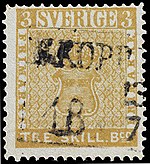
So towards an answer this article in City Weekend Beijing describes the Yuetan Stamp and Coin Market in Beijing. Pictures above are: the one and two cent Mauritius stamps that sold for $3.8 million each in 1992. The rarest stamp in the world - the Tre Skilling Banco Yellow, first stamp of Sweden and one of a kind and sold for $2.3 million in 1996. The most expensive stamp of China was a 19th Century Qing stamp - "One-Yuan Red Revenue Surcharged Small Issue" (Red, Top). A "1897 Three Cents Red Revenue stamp" going to auction later this month may be the next catch though.

PS. Most predictable/hilarious instantiation of the state in the aforementioned study: "special stamps” (including "less serious topics, such as folklores, flowers, birds, vegetation, architectures as well as paintings of famous artists") have a significantly higher psychological and monetary return than "memorial stamps" (which cover political themes such as "the 50th anniversary of the foundation of the People’s Liberation Army, the victory of the Resistance War against Japanese Invasion and the opening of the 17th National Congress of CPC.")

Read Full Post