PS
Doing research for Joyce Chaplin, J. Specht discovered a highlight of American cigarette slogans in the 50's: "Blow on her face, and she'll follow you anywhere."
The great hurrahs of the Cultural Revolution, the slogans, the messianic fervor, the public humiliation of the heretics are all gone. A visitor to Peking is impressed by nothing so much as by the return to normalcy, by pragmatism and-if one could imagine it in a Spartan land-a feeling of relaxation. Indeed, one might easily think that there had never been the awesome upheaval of 1966-69 "to change men's souls." Human frailty is once again understood, and there is at least an implied recognition that man does not live by faith alone.

"The appearance of colored peoples, and blacks in particular, in Chinese propaganda posters always has been problematic. Before the CCP grasped power, the only attention devoted to colored peoples in Chinese art was of a negative tone. Once the PRC was established, however, this attitude changed. Now that racial problems were seen as class problems, China increasingly discovered
similarities between its own traumatic experiences with ‘white imperialism’ and those of other victimized ‘colored’ people in the world. It was time to downplay the traditional and deeply ingrained feelings of superiority. One of the first official steps to gain credibility as a supporter of the oppressed was taken in September 1950, when the Chinese lodged an official protest against the policy of apartheid in South Africa. Africans soon became regular guests in Beijing, where they were entertained at parties and met with the highest state leaders. By the late 1950s, many delegations had passed through Beijing and Zhongnanhai. But the Chinese did not actively spread the gospel of revolution and national liberation yet. They merely positioned themselves as a model that needed to be followed to gain independence."
So thus from the international struggle for rights to the neoliberal imperial clamour.
Related:
Evan Osnos in the New Yorker on Guangzhou's Canaan Market and African merchants -"Nigeriatown" (Audio Slideshow) and "The Promised Land"
 And a from "the ground" article translated from the Southern Metropolis Daily: "“Chocolate City” - Africans seek their dreams in China"
And lastly, a story that (I think? Perhaps I was off the beat) was not on the radar of mainstream media during the Olympics as much but was a buzz on the blogosphere - police allegedly told bars to not serve "black people or Mongolians." (Original Shanghaiist piece.)
Later reports contended that "black" may have meant triad members (literally the "black society") - "Mongolians" had few homonyms to fall back on.
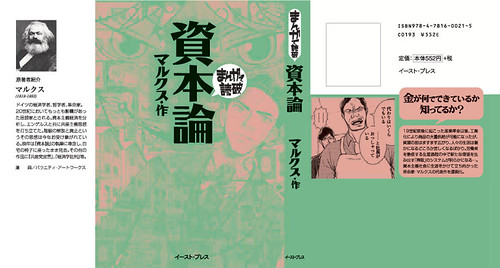 So Danwei had a brief feature about a new (not the first) attempt to bring Das Kapital onto the stage. Snaps of the original article on Sina were translated as such:

__THISRES__142978.jpg)
The whole organism, [Needham] argued, could not be fully grasped at any one of the lower levels of increasing size and complexity – the molecular, macromolecular, cells, tissues etc – and new modes of behaviour emerged at each level which could not be interpreted adequately in terms of those below or at all, except in their relations. As he wrote in Order and Life, ‘The hierarchy of relations from the molecular structure of carbon to the equilibrium of the species and the ecological whole, will perhaps be the leading idea of the future.’ Process, hierarchy and interaction were the key to a reality that could be understood only as a complex whole.
And – though one would not discover this from Winchester’s book – thisview drew him towards the country and civilisation to which he devoted the rest of his life. China was the dialectical home of Yin and Yang, of an ‘extreme disinclination to separate spirit and matter’, as Needham put it, of a philosophy which, it has been well said, saw the cosmos as a vast symphony that composed itself and within which other lesser symphonies took shape.
[...] Needham loved and admired China and the Chinese but, oddly, his heart went out to the imperial past rather than to the revolutionary present to which he was committed and which he defended (though he seems to have become a critic of Mao’s policies in the 1970s, even before the death of the Great Helmsman). He felt at home not only with the Chinese view of nature so lovingly reconstructed in Science and Civilisation in China but with a civilisation based on morality without supernaturalism, a great culture where the doctrine of original sin didn’t prevail and a country where no priesthood had ever dominated.
Discerning the religious spirit of secular states in Asia
"But the secular form of Asian political institutions often masks a religious spirit. Some examples: Japan has a secular constitution, but many of its government leaders have felt compelled to pray for the spirits of the war dead at the Yasakuni shrine.""However, this dynamism is of a different kind than that found in the United
States, and it cannot be explained in terms of the narrative Taylor uses in the North Atlantic world.
Asian religious developments are often misread by both Western observers and Asian scholars trained in the Western social sciences. When Western scholars have looked for religion in Asian societies, they have often looked for it in the form of private faith. But in most Asian societies, much of religion is neither private nor faith."
Hybrid consciousness or purified religion
"Taiwan’s state has taken a secular turn with democratization, but it still relies on religion to provide public stability and generate international recognition."


